Retina
What is the retina?
The eye converts a light stimulus into a sensory stimulus, which is converted into an image in the brain.
The eye converts a light stimulus into a sensory stimulus, which is converted into an image in the brain.
Depending on the disease, different defects can lead to the photoreceptors dying off over time. If macular cells die, this can lead to an impairment in sharp vision. If cells in the border areas are damaged, this primarily impairs spatial orientation. In some diseases, a retina laser such as Navilas® can be used to at least stop the disease from progressing. What is a retina laser?
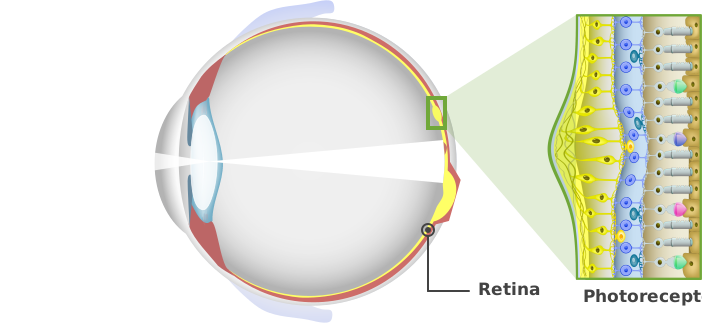
The photoreceptors are distributed unevenly around the eye. Cones are responsible for seeing color and detail, and thus they are particularly dense in the area of the sharpest vision – the macula. Rods are primarily found at the edge of the field of view and are used for orientation and perception of light and dark. The visual cells are surrounded by a pigment layer which, along with small blood vessels, is responsible for supply to photoreceptors.
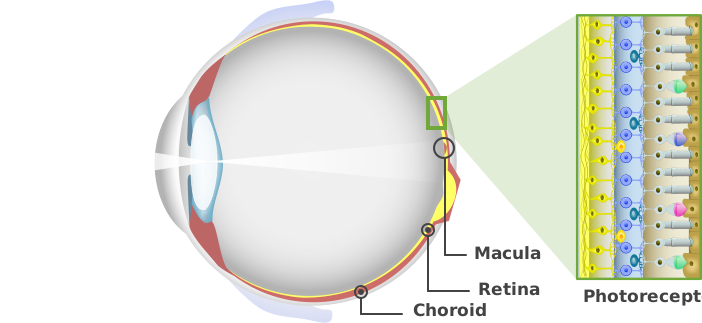
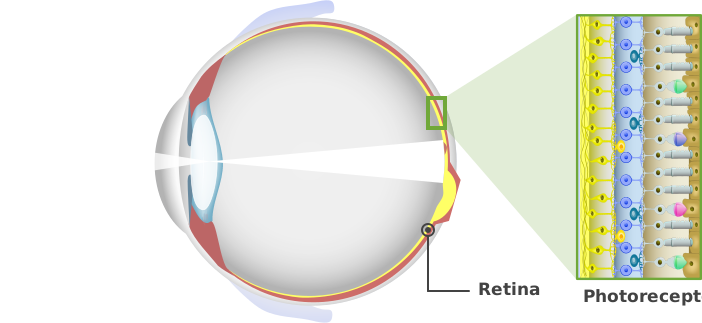
The retina itself contains a number of individual photoreceptors (vision cells), the rods and cones, which convert light into electrical impulses of the nerve pathways. These electrical impulses are then converted into an "image" by the brain.
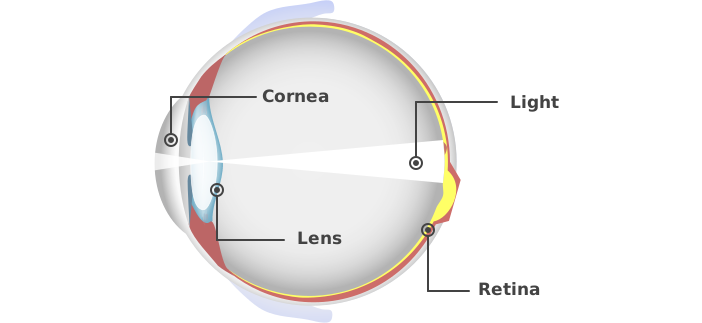
Light hits the cornea, where it is concentrated so that it can go through the pupil and the vitreous body to hit the retina.
"Many of our patients tell us that they find treatment with the Navilas® more comfortable and they no longer wish to be treated using conventional methods.”
English brochure, PDF
